


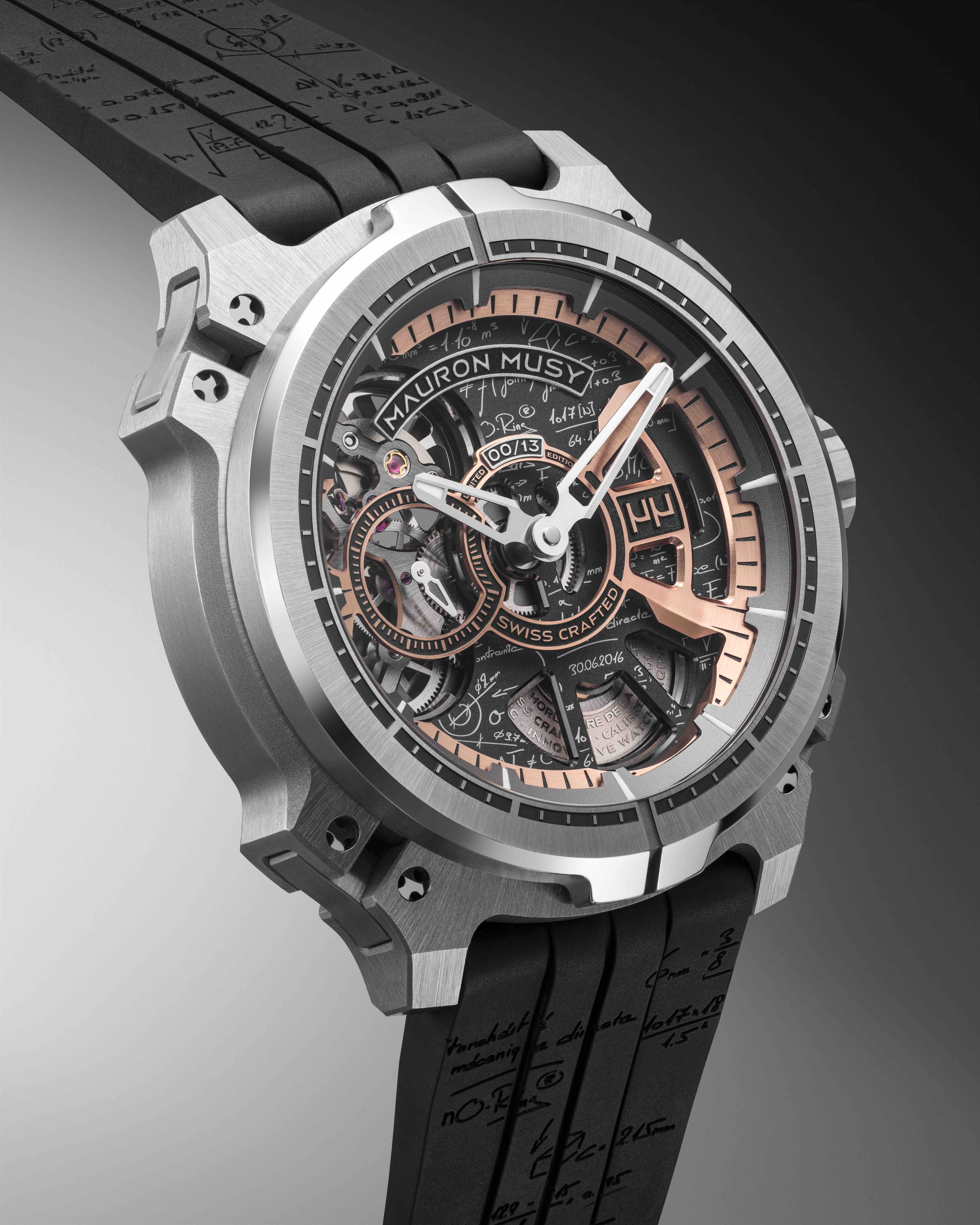
At Mauron Musy the comment is about the doorway. The team numbers twelve, the manufacture makes around three hundred watches a year, and someone is wondering aloud whether next year there should be a hostess at the reception. Not to welcome people. To filter them. Until recently, I am told, the effort went into getting visitors through the door; now it goes into keeping some of them on the other side of it. Nobody says this with regret. It is offered as good news, which it is.
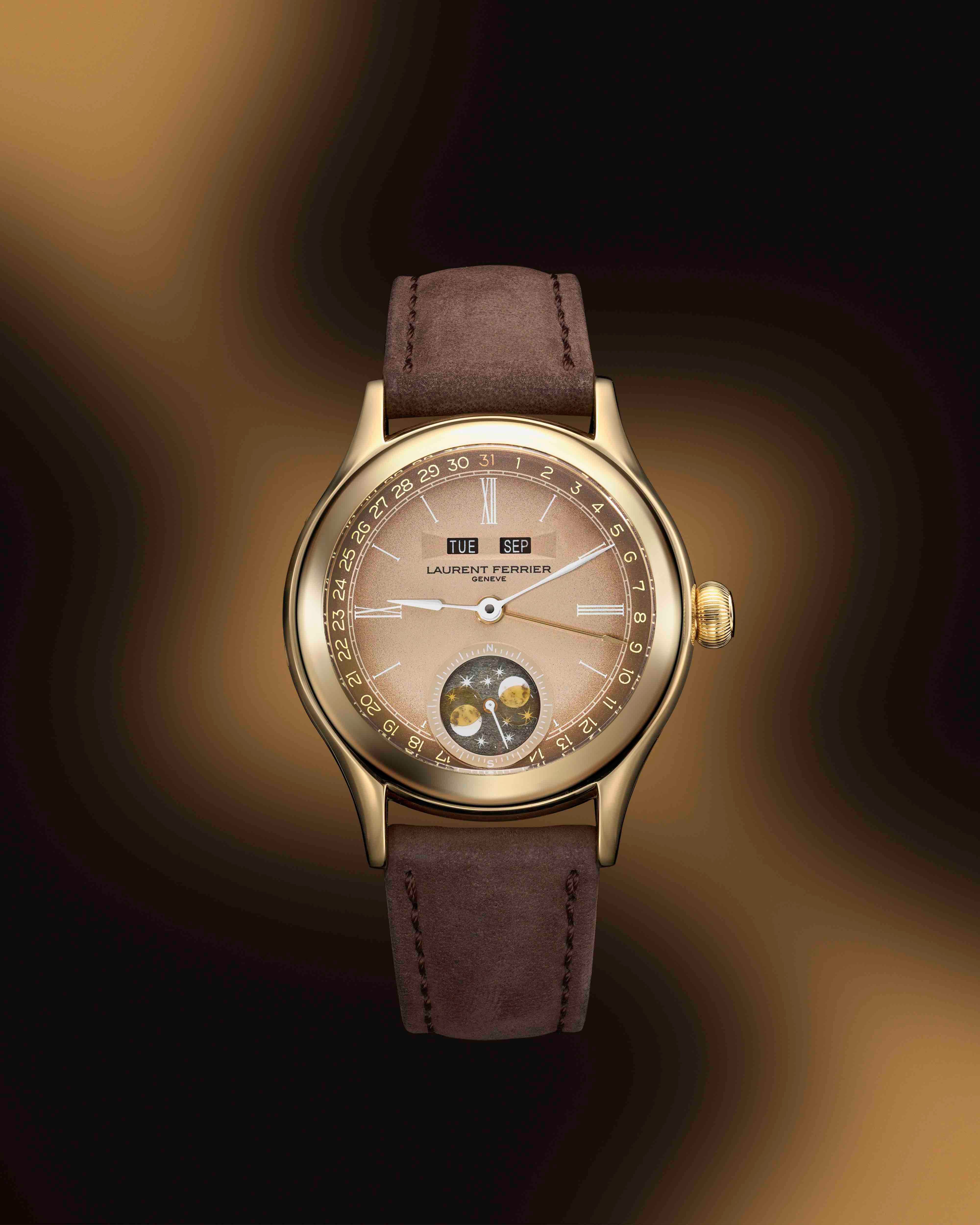
Elsewhere, some houses have already taken to shutting the door during presentations. At Laurent Ferrier, which still admits all comers, a member of the team understood why: people arrive without appointments, pick up pieces meant for someone else’s hands, ask their questions into the middle of another conversation. A closed door is simply the price of finishing a sentence.
Geneva Watch Days, according to the closing statement from its president, Jean-Christophe Babin, unfolded “without barriers, in a spirit of openness and genuine conviviality.”
It rewards a slow reading. Five days under bright blue skies. Seventy-one brands, a new record. Nearly four hundred new releases. More than 2,500 collectors, private clients and enthusiasts, more than double last year. Nearly 5,000 unique visitors to the Pavillon at the Rotonde du Mont-Blanc, around 1,200 of them on the Sunday alone; nearly 3,000 through the Blue Box and its exhibition of the Four Elements. CHF 115,500 raised at the Phillips charity auction for the Geneva Watchmaking School and the Pierre Amstutz Fund. A Nobel laureate, Didier Queloz, among the physicists invited to discuss the nature of time. The city felt more open, the text says, more vibrant, more spontaneous. And the strongest signal, it adds, came from the watch community itself, as though the growth had arrived unbidden, like weather, and the organisers had merely opened the windows.
Every figure in that document is a record. The figures I collected in the suites were ceilings.
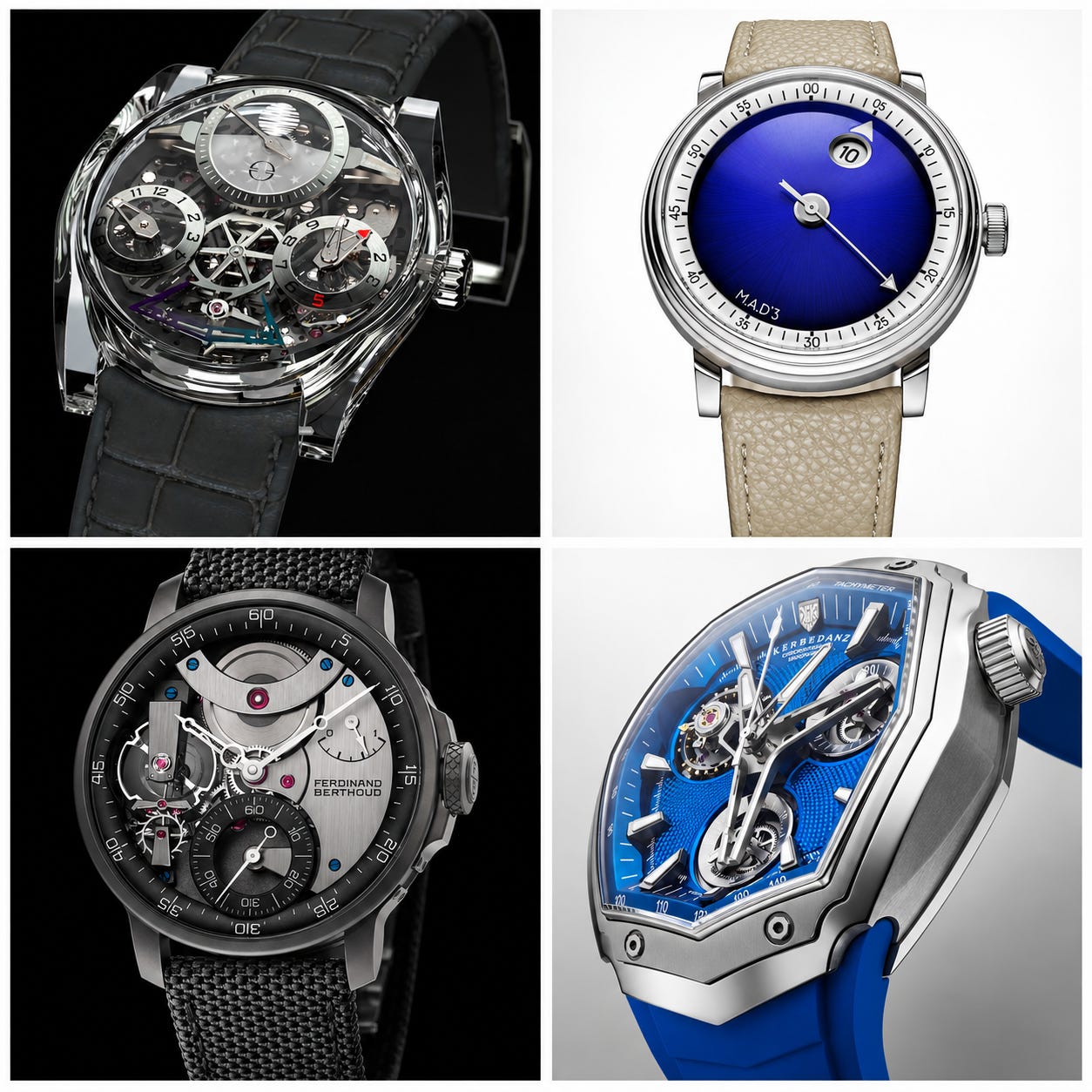
MB&F took meetings in half-hour slots, back to back, twenty a day each, two people presenting in parallel: something like a hundred and sixty conversations in four days. Its newest MAD Edition, the MAD 3, is allocated by raffle, a bailiff presiding over the draw, and by the morning I visited some 10,500 people had entered for 1,500 watches. Emmanuel Bouchet makes fifty pieces a year at most. Ferdinand Berthoud makes sixty or sixty-five. Kerbedanz will not go past a hundred, and knows what the floor looks like: for its first six years it made only four unique pieces, for clients who preferred discretion, and remained all but invisible. Later, one of its watches, bearing the Armenian alphabet, was given to Pope Francis and now sits in the Vatican Museums. These are not the numbers of an industry that wants more. They are the numbers of an industry whose entire proposition is that there will be less: a scarcity economy that spent five days inside an abundance event.
As for where the traffic came from, MB&F offered an explanation less lyrical than the press release’s. Many collectors, I was told, make one watch trip a year with friends, and when Dubai Watch Week is on, Dubai tends to win. Dubai Watch Week is biennial. Its seventh edition ran in November 2025; there is none this year. Part of what Geneva experienced as a groundswell, then, was a gap in someone else’s calendar. The community did send a signal. It was partly a signal about Dubai.
Scarcity has a balance sheet of its own, and the press release does not print it. Jean-Marc Fleury, whose young brand makes about four watches a month, takes pre-orders on every model; the collectors’ deposits are what set production in motion. At Emmanuel Bouchet there is no investor. Another of the founder’s companies carries part of the cost, and when the travel budget for Mumbai and Hong Kong ran out, the travelling stopped; the new sapphire-cased piece, five examples at CHF 295,000, waits on a case that takes a Jura workshop three months to make. Akhor, barely a year old, arrived with a different kind of capital: its founder, Anissa Bader, runs Clamax, a Geneva component supplier. Within its first year the brand has collected a chronometer certificate and the Poinçon de Genève, and its newest pieces, among them a gold edition priced at CHF 198,000, have been made before they have been sold. A single-brand boutique in Geneva is due to open before the end of the year. Less may be more, but someone pays for it in advance: a collector, a sister company, a supplier’s workshop. Demand, for its part, proved remarkably indifferent to cost. At Louis Erard I heard that American collectors had kept buying a hand-engraved piece through the months when Washington’s tariff on Swiss goods stood at 39 per cent.
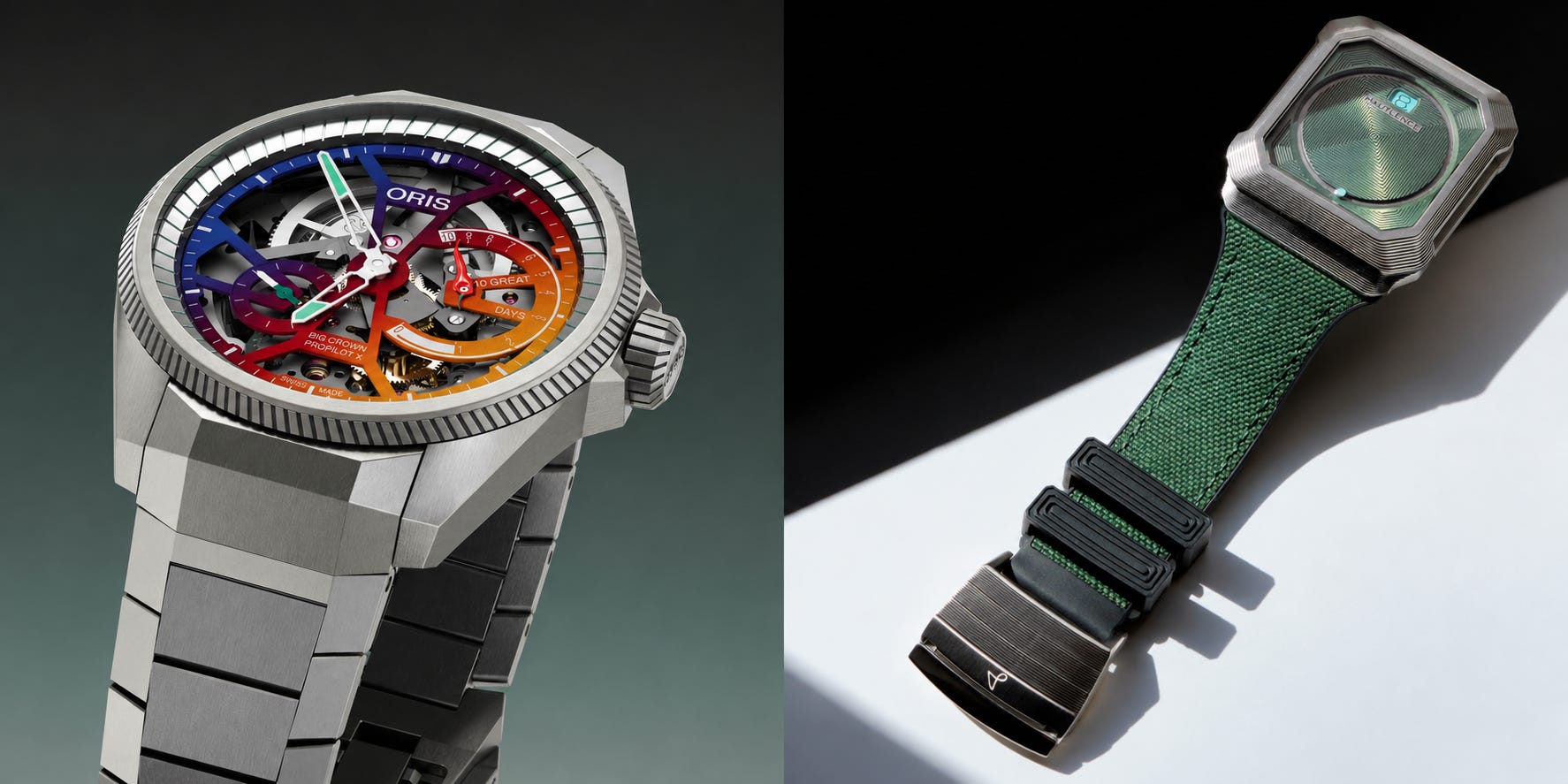
The appetite for more, meanwhile, was not confined to the press release. At Bell & Ross, the representative walked me through the year with disarming candour: meteorite dials, a collaboration, a case reduced in size, green in several places, a smoked dial. The house, I was told pleasantly, was following the trends. Oris presented a skeletonised pilot’s watch dedicated to Gonzo, the third Muppet in its series after Kermit and Miss Piggy, and declined to disclose production figures on the grounds that it is independent. MB&F, with Maison Alcer, had sold out fifty examples of a CHF 12,000 table clock delivered as 233 components and a manual of some 250 pages. Some of those who wanted one, it emerged, had not grasped that they would be building it themselves. None of this is reprehensible. It is simply more, arriving from inside.
The crowds themselves were real, and nobody I spoke to wanted them gone. But unease surfaced in more than one suite, usually once the recorder had been running long enough for politeness to relax. At Hautlence it took the form of a threshold: a size beyond which a gathering of collectors stops being one and becomes simply another fair. The same house agreed that it dislikes the pressure to present something new every six months. At MB&F the worry was the brands that do not exhibit at all but set up nearby and summon the press to them, leaving those who paid to take part short of visitors. It has become very easy, I heard there, to become an independent brand. Whether it is easy to remain one is a question the secondary market usually answers later.
I confess to carrying a question of my own from suite to suite, about the new brand with three hands, no precious metal, no complication and a price of fifteen thousand francs, justified by the word in-house. At Hautlence the reply came with a dry footnote: sometimes we did it ourselves turns out to mean a modified ETA. The remedy proposed there was unfashionable enough to be convincing. Say where the parts come from (in Hautlence’s case, openly, from sister company H. Moser), then let the collector decide.
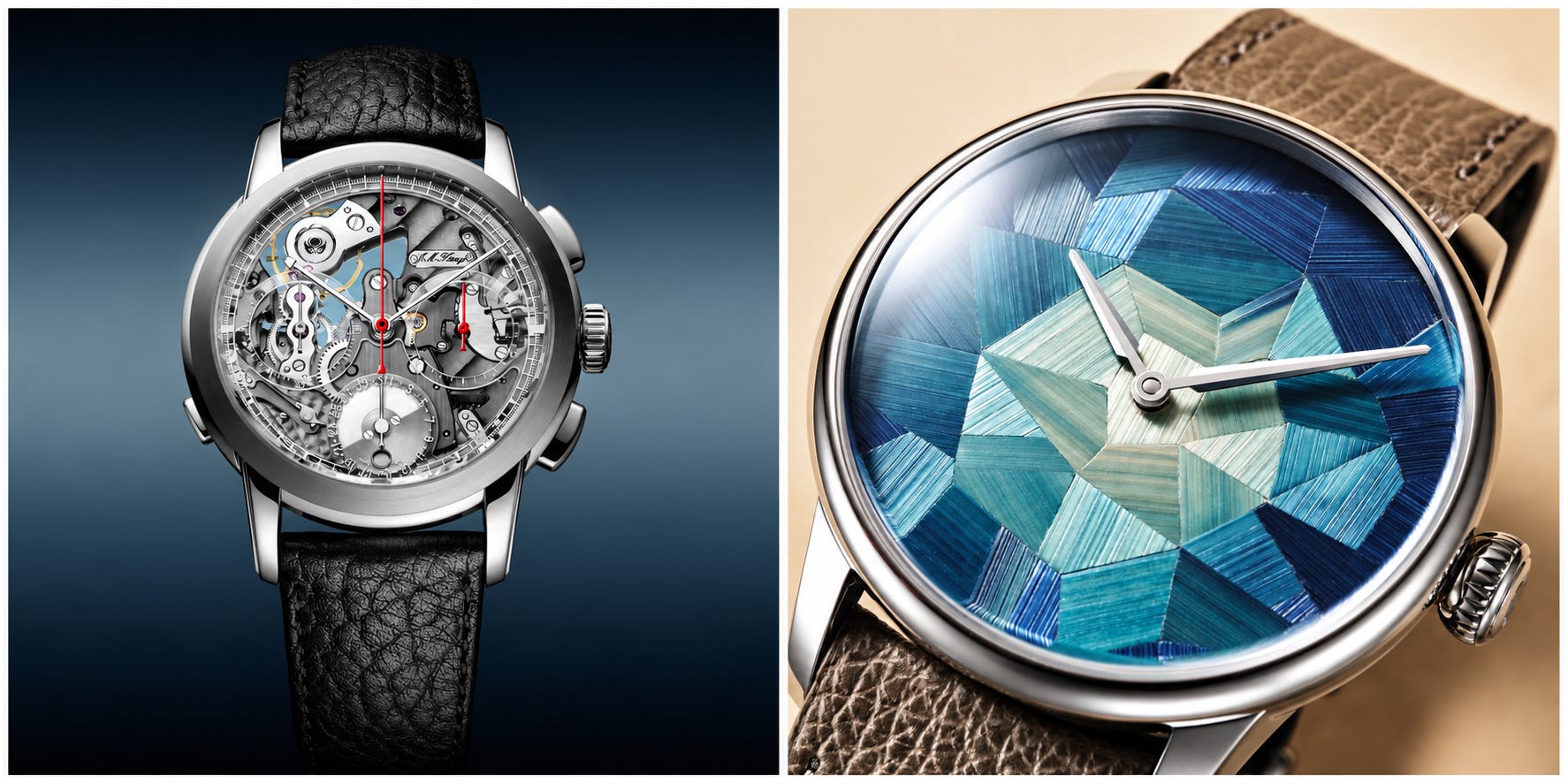
The most eloquent answer to all of this was a dial that carries no maker’s name. Louis Erard’s new straw-marquetry edition exists in twenty-five pieces because only one artisan can make them: rye straw, matte on one face and glossy on the other, cut and laid fragment by fragment, some twelve hours of work per dial spread over several days, with no gesture permitted to go wrong. His name is Bernardo d’Orey. The house credits him readily, and he counts himself lucky that it does; yet his name is engraved nowhere on the watch. The dial carries no inscription at all, not even Swiss Made, which he described to me as an empty frame that lets the work speak. Fleury, who spent more than a decade at Patek Philippe before making components for other people’s independents, explained why he finally put his own name on a dial: as a tribute to a craft he feels honoured to practise, and a responsibility he accepts. One signs; one leaves the frame empty. Both answer the same question: who made this? The press release, busy counting brands, never asks it.
A name, once signed, also has to be inherited. Laurent Ferrier turns eighty in December and still comes to the atelier two days a week; his son has left the company, and what the founder knows is being passed to two full-time movement constructors and a designer he has trained. At MB&F, Vincent Calabrese, eighty-two, co-founder of the AHCI in 1985 and author of the Baladin whose wandering hour the MAD 3 revives, came by for an hour at lunchtime, visibly tired. The house had wanted to launch the watch while he could still enjoy it. Its rotor carries a sentence of his, in French: it is easy enough to please others, far harder to be proud of oneself. Fleury, for his part, speaks of his children and of building not one large structure but several small pyramids.
The physicists at the Pavillon were asked what time is. The suites had a more practical answer. Strip the week of its mythology and one thing survives. Not the record, nor the four hundred novelties no one could see in full. The half hour. At Watches & Wonders, the Hautlence representative told me, a meeting lasts five minutes; here it lasts thirty, and a latecomer who never wrote ahead can still be offered a chair. It is the only unit in which an eighty-year-old’s knowledge can be handed on, or an artisan’s straw examined in the light. That is the real product of Geneva Watch Days, and it is the one thing the press release does not count, because it cannot be multiplied. Every record in that document is a withdrawal from it. Seventy-two brands will be easy to find. Thirty minutes will be harder to keep.
About the Author
Sergio Galanti is the founder and editor of WatchDossier, contributor to Italian and international watch publications, the author of Against the Grain: A Cultural History of Swiss Independent Watchmaking, and advisor to private collectors.
No compensation or brand affiliation influenced this essay. Opinions are the author’s own.
Subscribe to watchdossier.ch to receive more insights on luxury, craftsmanship, and collecting.