


This text is written as a parable. The watch at its centre is the Celestia Astronomical Grand Complication by Vacheron Constantin. The conditions under which its indications become fully legible are real rather than exaggerated. What follows is not a review, but a reflective exercise in use, scale, and expectation—an attempt to read a mechanical object on its own terms rather than our own.
The watch arrived with the quiet authority of something that did not feel the need to explain itself. Forty-five millimetres across, dense with promise, it appeared less like an accessory than a proposition. It claimed, without bravado, to contain tides, stars, seasons, and centuries. It did not ask whether a wrist was the appropriate place for such ambitions. It assumed the answer had already been given.
At first, it was treated like any other watch. It was worn indoors, under artificial light, between appointments. The hands moved with certainty. The displays were crisp, legible, and immaculately finished. Everything functioned as intended. And yet nothing quite spoke. The watch told the time, but it did not reveal it. Its many indications existed in a state of polite silence, present but strangely detached from the world they described.
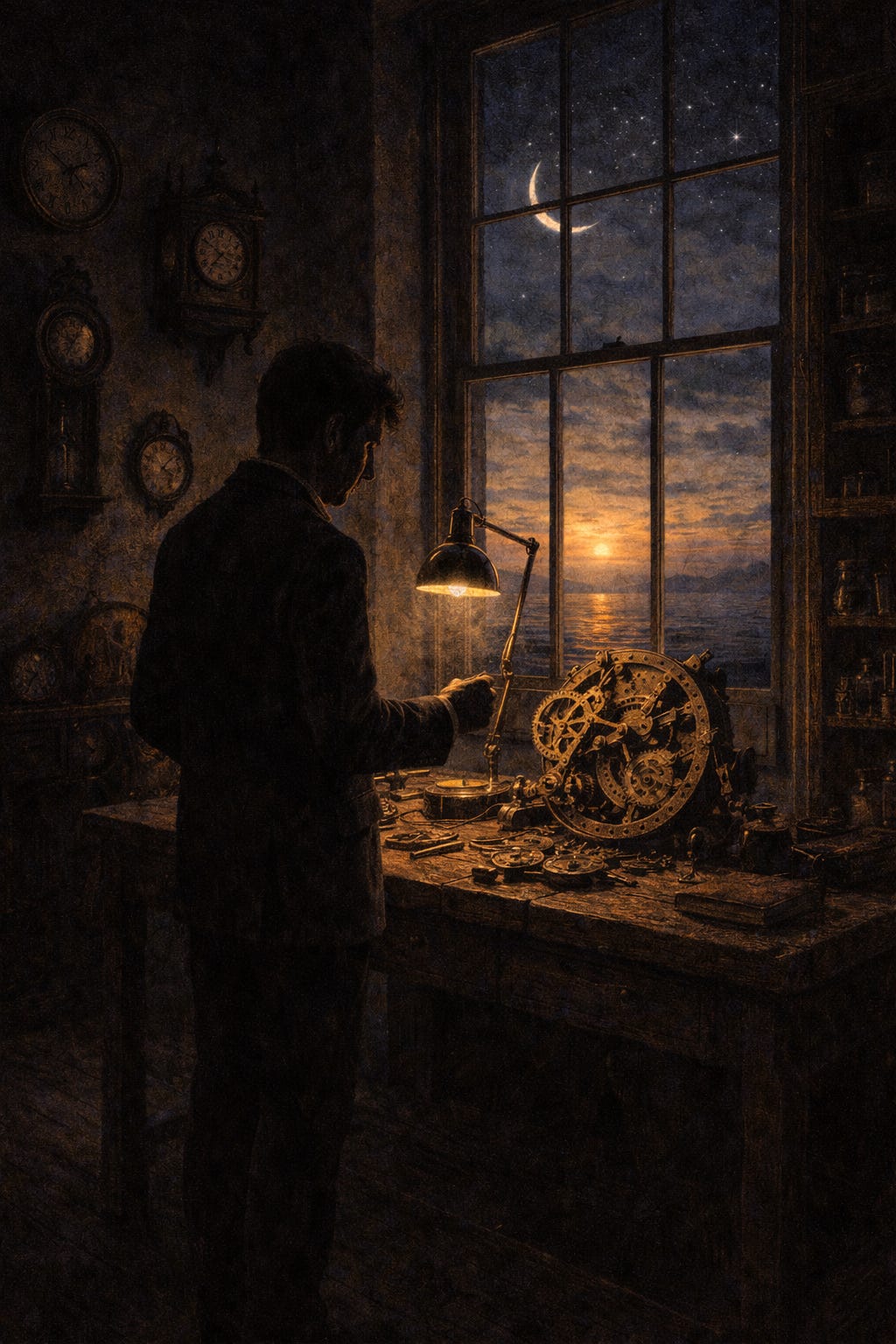
This was not a failure of mechanics. On the contrary, the watch was operating flawlessly. The failure lay elsewhere. The wearer had assumed that possession was the same as comprehension, that proximity alone would unlock meaning. The watch seemed untroubled by this misunderstanding. It did not simplify itself. It did not translate. It waited.
Gradually, conditions began to present themselves—not as instructions, but as necessities. The watch, it became clear, was not interested in interiors. It required light that was not manufactured. Solar time, displayed with such care, made little sense when the Sun itself was absent. Sidereal time, traced with astronomical precision, felt abstract without stars against which to test it. Even the calendar indications—solstices, equinoxes, the slow turning of the year—felt ornamental when divorced from weather, horizon, and sky.
One by one, the requirements accumulated. A latitude close enough to the equator for the rising and setting of the Sun to behave as described. A view of the sea, if the tide was to be more than a number. A moment of transition, when day concedes to night, and the sky begins to declare itself. None of this was stated anywhere. The watch did not insist. It simply withheld its meaning until the world complied.
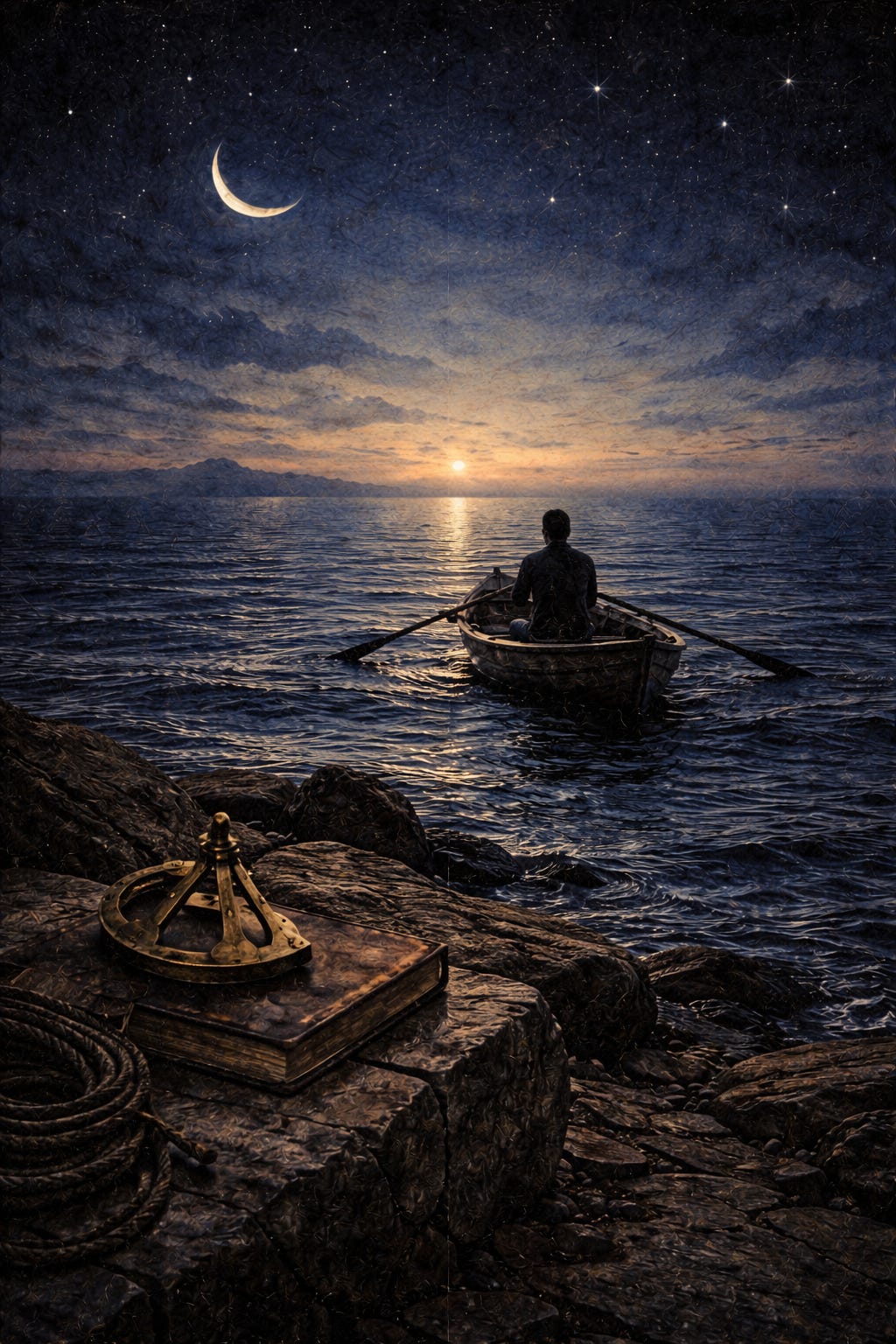
So the environment changed. Not dramatically, not heroically. The essay does not require a journey, only a relocation. Offices receded. Screens dimmed. The horizon reappeared. At dusk, near water, under a sky that had not yet forgotten the stars, the watch began, almost reluctantly, to align with reality.
Civil time remained, of course—useful, conventional, obedient. But alongside it, solar time asserted its quiet difference. The equation between the two, so often ignored, became visible as a reminder that clocks are compromises. Sidereal time, once an abstraction, now corresponded to the slow procession overhead. The celestial map on the caseback stopped being a diagram and became a reference.
Nothing dramatic occurred. There was no revelation, no triumph. The watch did not announce that it was finally being understood. It merely ceased to resist interpretation. Its indications began to agree with the world rather than contradict it. The Moon’s phase corresponded to the light on the water. The tide indicator, so rarely encountered on a wristwatch, found its counterpart in the shoreline. Even the calendar functions—those slow, patient markers of the year—felt grounded in something physical, rather than decorative.
In that moment, it became clear that the watch had never been intended for constant use. It was not designed to be useful in the modern sense of the word. It was designed to be right, but only occasionally. Its precision was not about efficiency, but about correspondence. It did not aim to assist daily life; it aimed to demonstrate that the language of astronomical timekeeping still exists, fully formed, even if no longer required.
This is where the watch’s exaggeration reveals its true nature. Twenty-three complications in a wristwatch is not an attempt to improve utility. It is an act of insistence. A declaration that mastery does not need justification beyond its own coherence. The watch is not answering a demand. It is making a statement: this can still be done.
Craftsmanship, in this context, becomes less about spectacle and more about refusal. The refusal to simplify, to modernise, to make the watch more accommodating than the universe it describes. Every indication is finished as if it mattered deeply, whether or not it will ever be consulted. Even those components that remain invisible are treated with the same seriousness, not because they will be seen, but because they exist.
And yet, there is an unavoidable irony here. Many who admire such a watch—enthusiasts, collectors, even the well-informed—will never fully decode it. They will recognise the perpetual calendar, the tourbillon, perhaps the moon phase. Beyond that, comprehension thins. Sidereal time becomes a word rather than a practice. The equation of time is acknowledged and then forgotten. The tide indicator is admired precisely because it is never used.
This, too, appears intentional. The watch does not require understanding from its owner. It requires belief. Belief that the knowledge is there, complete and intact, whether or not it is accessed. In this sense, the watch functions less as an instrument and more as a reliquary of expertise. It preserves a way of thinking about time that has largely vanished from daily life.
Eventually, the setting changes again. The wearer returns to the city. Artificial light replaces the sky. The sea recedes into memory. The watch resumes its earlier state: impressive, legible, and largely symbolic. Nothing has been lost. Nothing has been gained. The world has not adjusted itself to accommodate the watch.
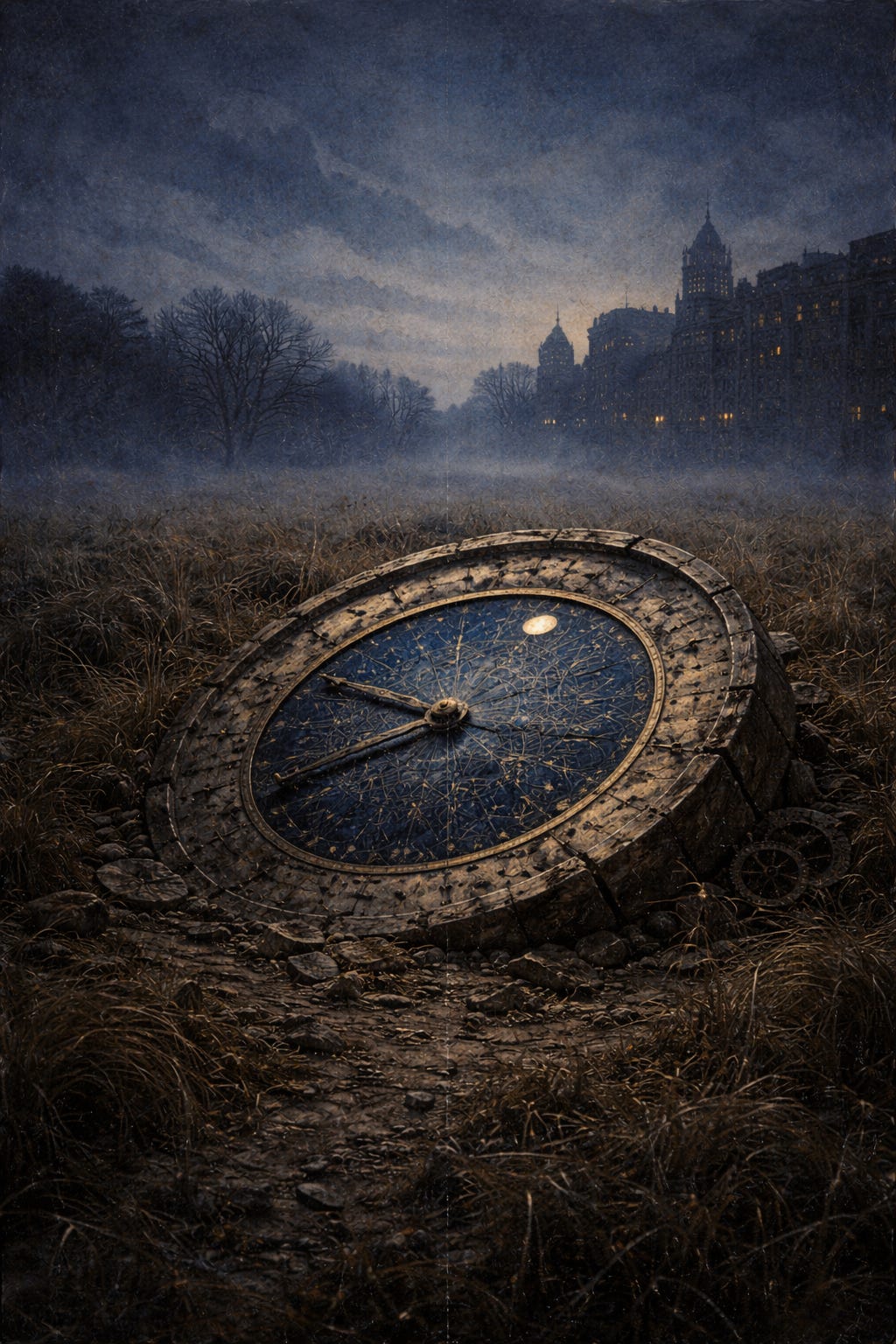
And that may be the point. The watch does not exist to be practical. It exists to remind us that time was once something observed, not merely scheduled. That hours were derived from shadows, not notifications. That tides rose and fell long before anyone thought to wear them on a wrist.
The parable ends without instruction. The watch remains. The world continues. The reader is left to decide whether the exaggeration is absurd—or whether it is, in its own way, a form of restraint.
About the Author
Sergio Galanti is an independent brand strategist and writer in the luxury watch industry. He is the editor of WatchDossier, a publication devoted to the cultural and philosophical undercurrents of modern horology.
No compensation or brand affiliation influenced this essay. Opinions are the author’s own.
Subscribe watchdossier.ch to receive more insights on luxury, craftsmanship, and collecting.